

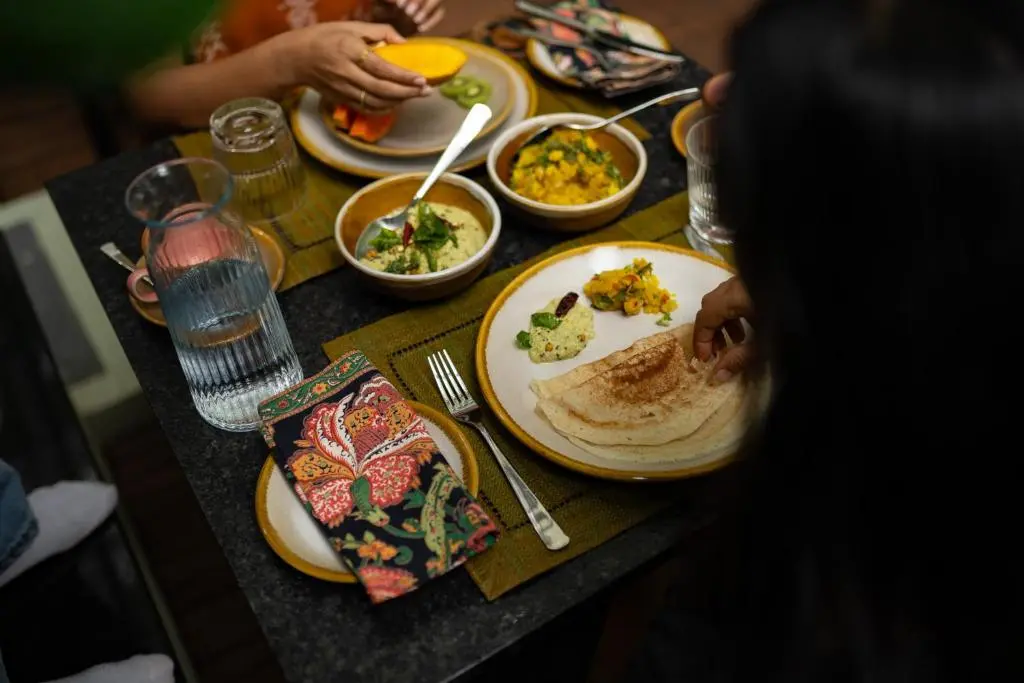
 South indian meal in Gokulam
One of the most common questions I get from people planning their first trip to Gokulam is some version of: "How much money do I actually need?" The answers floating around online range from absurdly cheap to surprisingly expensive, and the truth is that both can be accurate depending on the choices you make.
I have lived and practiced in Gokulam across multiple seasons now. What follows is an honest breakdown of what things cost, with the caveat that prices shift year to year and the only way to get current numbers is to check directly with providers. This is a framework for thinking about your budget, not a price list carved in stone.
How Much Does Yoga in Mysore Actually Cost Per Month?
The total monthly cost of living in Gokulam for a yoga student typically falls somewhere between the equivalent of what you might spend in a mid-sized Western city on rent alone and about half of that figure. For most students who are neither backpacking on the absolute minimum nor spending freely, the all-in monthly cost — accommodation, food, shala fees, transport, and incidentals — lands in a range that surprises people coming from Europe, North America, or Australia. It is genuinely affordable, but it is not free, and the costs add up faster than the initial numbers suggest.
The biggest variable is accommodation. After that, it depends on how often you eat out, whether you pursue Ayurveda or bodywork, how much you travel on weekends, and whether you have a scooter habit or walk everywhere. I will break each of these down.
What Do Shala Fees in Gokulam Look Like?
Shala fees in Gokulam vary meaningfully from one teacher to another. Some shalas charge a fixed monthly rate. Others work on a sliding scale or offer different rates depending on the length of your stay. A few operate on a donation basis, though this is rare. The range across Gokulam's established shalas is wide enough that it is worth checking current rates directly before you budget — what was accurate last season may not hold this season.
Most shalas expect payment monthly, in advance, and in cash. Some now accept bank transfers. Almost none accept credit cards. This is worth planning for: you need access to Indian rupees, and ATM withdrawal limits in India can make it tedious to pull large amounts at once. Bring a debit card with reasonable international withdrawal limits, or plan to do a bank transfer.
Trial periods of a few days to a week are common before you commit. Use them. You can browse established shalas in Gokulam on Sutraha's yoga shala listings to get a sense of what is available before you arrive.
How Much Does Accommodation in Gokulam Cost?
Accommodation is the single largest expense, and the range is enormous. At the budget end, you can find a basic room in a shared house — fan-cooled, simple furniture, shared bathroom — for a modest monthly rate. At the upper end, a well-appointed single apartment with AC, a kitchen, and a washing machine can cost several times that amount.
What Are the Main Accommodation Types?
Shared houses or flats are the most common arrangement for yoga students. You rent a room in a house with other practitioners. Kitchens and bathrooms are shared. The social aspect is a genuine benefit — you end up with built-in community. The downside is noise, shared fridge politics, and the occasional housemate whose alarm goes off at 4am and wakes the entire house. Costs sit at the lower end of the spectrum.
Independent rooms or studio apartments give you your own space, usually with a private bathroom and sometimes a small kitchen or kitchenette. This is the sweet spot for most students staying a month or longer. Prices vary depending on the specific location within Gokulam, the quality of the furnishing, and whether AC is included.
Guesthouses and homestays offer a more structured arrangement, sometimes with meals included. These tend to cost more but remove the burden of cooking and managing a household. Some homestay hosts have been accommodating yoga students for years and understand the early mornings and dietary needs without explanation.
Serviced apartments and higher-end rentals exist for those who want reliable hot water, consistent wifi, air conditioning, and modern kitchens. These cost meaningfully more but are still a fraction of equivalent accommodation in most Western cities.
The key advice: book your first week or two in advance, then look for longer-term accommodation once you are on the ground. Rates are almost always better when negotiated in person, and you can see the actual room rather than trusting photos. Check places to stay in Gokulam on Sutraha for current listings.
Does Location Within Gokulam Matter for Price?
Yes, noticeably. Rooms closer to the main shalas command a premium because walkability is everything at 5am. If you are willing to be a ten-minute walk further out — still within Gokulam, just on the edges — prices drop. A scooter or bicycle extends your range further, but most students prefer to walk to practice and the convenience premium of being central is worth it for many people.
How Much Should I Budget for Food in Gokulam?
Food in Gokulam is genuinely inexpensive if you eat the way the neighbourhood eats. South Indian vegetarian food — idli, dosa, rice plates, thalis — costs very little at local restaurants. A full meal at a local spot can cost less than a single coffee in most Western cities. This is not an exaggeration.
The yoga-student cafe economy is a different story. Gokulam has developed a layer of cafes that cater specifically to international practitioners — smoothie bowls, avocado toast, protein pancakes, good coffee. These places are wonderful and I eat at them regularly, but they cost meaningfully more than the local joints. Not expensive by Western standards, but the difference adds up over a month.
What Does a Realistic Monthly Food Budget Look Like?
If you cook most meals at home and eat at local restaurants, your monthly food spending will be remarkably low. If you eat breakfast and lunch at the popular yoga-student cafes daily, expect to spend several times more. Most people land somewhere in the middle — cooking breakfast at home, eating lunch at a cafe a few times a week, and having simple dinners.
Grocery shopping at the local markets and stores is cheap for basics: rice, vegetables, fruit, eggs, bread, yoghurt. Imported items — granola, nut butter, specialty health foods — cost more, sometimes approaching Western prices. The Nature's Blessing store and a few others in Gokulam stock these items and do steady business with the yoga community.
Coconut water from the street stalls is practically a food group in Gokulam. Budget for one or two a day. They cost almost nothing and you will want them.
For a deeper look at where to eat, see our food guide for Gokulam and browse local businesses on Sutraha.
What About Transport Costs in Gokulam?
Within Gokulam itself, most students walk everywhere. The neighbourhood is compact enough that your shala, your cafe, and your accommodation can all be within a fifteen-minute walk of each other. This is by design — or at least by happy accident — and it keeps daily transport costs at zero for many people.
Is a Scooter Worth Renting?
Many students rent a scooter for the duration of their stay. Monthly scooter rental rates are reasonable, and having your own wheels opens up Mysore city, nearby day-trip destinations, and the ability to explore more freely. You will need an international driving permit (technically), though enforcement varies. Petrol is cheap. The main cost is the rental itself, plus the occasional parking fee.
Auto-rickshaws are the default transport for trips into Mysore city or to the train station. Fares are low but should be negotiated or metered — agree on a price before you get in. Ride-hailing apps work in Mysore and are often cheaper than negotiating with auto drivers directly.
For longer trips — Chamundi Hill, nearby temples, weekend getaways — you can hire a car and driver for the day at rates that would seem impossibly cheap in most Western countries. Splitting the cost with a few fellow students makes it even more accessible.
How Much Do Ayurveda and Wellness Treatments Cost?
Ayurveda and bodywork are a significant part of the Gokulam experience for many yoga students, and they represent a real budget category that people often underestimate. A single Abhyanga (oil massage) or therapeutic treatment might seem inexpensive per session, but if you are going two or three times a week — as many students do — it adds up over a month.
Treatment costs vary depending on the practitioner, the type of treatment, and the duration. Established Ayurvedic doctors with years of experience charge more than newer practitioners, and rightly so. Specialised treatments like Panchakarma (a multi-day detox protocol) are a significant investment.
Browse wellness services and practitioners on Sutraha to compare options and find current availability. For a fuller picture of what is available, read our guide to Ayurveda in Gokulam.
What Are the Hidden Costs That Catch People Off Guard?
Visa and Travel Insurance
Your Indian visa has a cost that depends on your nationality and visa type. Travel insurance that covers yoga practice (not all policies do — check the fine print) is a recurring expense. Neither is negligible.
Laundry
Most students use a local laundry service. Clothes are washed, dried, and folded for very little money. Some accommodations include a washing machine, but many do not. Laundry costs are small individually but steady.
SIM Card and Data
An Indian SIM card with a data plan is essential and cheap. You will need it for maps, messaging, ride-hailing apps, and staying in touch. Registration requires your passport and can take a day or two to activate, so do it early.
Workshops and Special Events
Gokulam regularly hosts workshops, intensives, kirtan evenings, philosophy talks, and other events beyond regular shala classes. Some are free, some charge a fee. If you are the type who wants to attend everything — and the offerings are genuinely good — budget for it. Check the events calendar on Sutraha to see what is happening during your visit.
Weekend Trips
Mysore is surrounded by places worth visiting: Chamundi Hill, Srirangapatna, Somnathpur, the Kabini backwaters, Coorg for coffee plantations. Most students take at least a few day trips. These cost relatively little but are not zero.
The Comfort Creep
This is the one nobody warns you about. You arrive planning to live simply. Then you discover the really good coffee place. Then someone recommends an Ayurvedic treatment that changes your practice. Then you find a slightly better room. Then you start buying coconut water twice a day instead of once. None of these individual upgrades is expensive, but the cumulative drift from your original budget is real. I have watched it happen to disciplined people. I have watched it happen to me.
How Does the Cost Compare to Practicing Yoga at Home?
This is the comparison that makes Gokulam remarkable. In most Western cities, a monthly unlimited yoga membership costs a significant amount. Add rent, food, transport, and the cost of living in a place like London, New York, or Sydney, and your total monthly expenditure dwarfs what you would spend in Gokulam — even with the shala fees, the Ayurveda, the cafe lunches, and the weekend trips.
In Gokulam, you are getting daily one-on-one instruction from experienced teachers in a tradition that has been practiced here for decades, surrounded by a community of dedicated practitioners, in a neighbourhood built around the practice. The value proposition is genuinely extraordinary, and it is one of the reasons people keep coming back.
What Is a Reasonable Total Monthly Budget?
I am deliberately not putting exact rupee amounts here because they change, and outdated numbers are worse than no numbers. Instead, here is how to think about it:
Lean budget: Shared room, cooking at home, eating at local restaurants, walking everywhere, minimal extras. This is entirely doable and many students live this way happily.
Comfortable budget: Private room with bathroom, mix of home cooking and cafe meals, scooter rental, weekly Ayurveda treatment, occasional events and day trips. This is what most students who stay for a month or longer settle into.
Generous budget: Nice apartment, eating out freely, regular bodywork and Ayurveda, workshops, weekend travel. Still remarkably affordable by Western standards.
For current prices on accommodation, services, and events, check the listings on Sutraha. Providers update their information directly, so you are getting real numbers rather than secondhand estimates.
How Should I Handle Money in Gokulam?
Cash is still king in Gokulam for many transactions. Shala fees, auto-rickshaws, market shopping, coconut stalls, and some accommodations are cash-only. UPI (India's digital payment system) is increasingly accepted, but setting it up as a foreigner requires an Indian bank account, which is not practical for short stays.
Bring a debit card with low international fees. ATMs are available in Gokulam and nearby, but withdrawal limits per transaction are capped, so you may need multiple withdrawals for larger expenses. Notify your bank before you travel — cards getting blocked in India is common and inconvenient.
Some students bring a portion of their budget in USD or EUR and exchange it at money changers in Mysore city, where rates are typically better than at the airport.
Is Gokulam Getting More Expensive?
Yes, gradually. As the yoga community has grown and international demand has increased, prices — particularly for accommodation — have risen. Gokulam is no longer the extraordinarily cheap destination it was fifteen or twenty years ago. It is still very affordable compared to practicing and living in the West, but the gap is narrowing slowly.
The best way to keep costs manageable is to stay longer. Monthly rates for accommodation are significantly better than weekly rates. Shala fees are structured around monthly commitment. Relationships with local businesses develop — your regular vegetable seller, your laundry person, your coconut stall — and these steady relationships often come with better informal pricing.
Plan ahead, budget honestly, add a margin for the comfort creep, and you will find that Gokulam remains one of the most accessible places in the world to dedicate serious time to yoga practice. Check Sutraha for current listings and prices to build your budget with real numbers.
For answers to other common planning questions, visit our FAQ page.