

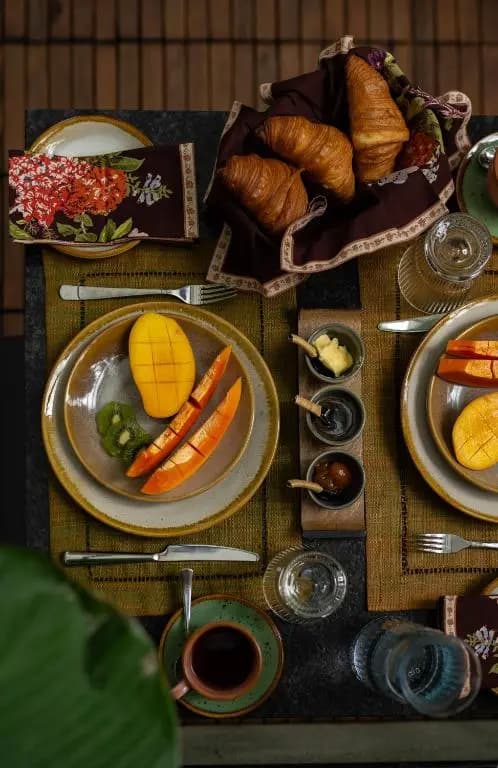
 Summer Breakfast at Villa Vani
Food in Gokulam is inseparable from the practice. What you eat, when you eat it, and how your body responds to it will shape your time on the mat in ways that become obvious within the first week. This is not a restaurant review or a list of Instagram-worthy brunch spots. It is a practical guide to eating well in Gokulam — meaning eating in a way that supports a demanding daily practice in a climate and food culture that may be entirely new to you.
I have eaten my way through Gokulam across multiple seasons and made most of the mistakes so you do not have to. Here is what I have learned.
What Is the Eating Culture Like for Yoga Students in Gokulam?
The eating rhythm in Gokulam is dictated by Ashtanga practice, and it looks nothing like how most people eat at home. You practice on an empty stomach, which means no food from the previous evening until after practice the next morning — a natural fasting window of twelve to fourteen hours. Breakfast after practice is the main event. Lunch is moderate. Dinner is early and light. By 8pm, most practitioners have eaten their last meal and are heading toward sleep.
This rhythm is not a diet. It is a practical adaptation to the demands of the practice. A full stomach and deep forward folds do not coexist happily. Sluggish digestion and 4:30am starts are not compatible. The eating pattern that yoga students in Gokulam converge on — regardless of what they ate at home — is remarkably consistent because the practice itself demands it. Your body will tell you what works within the first two weeks; your job is to listen.
Where Do Yoga Students Eat Breakfast in Gokulam?
Breakfast is the social meal in Gokulam. It is when the community gathers, when plans are made, when the morning's practice is processed and discussed. The neighbourhood has developed a layered ecosystem of breakfast spots that serves everyone from the budget-conscious to the avocado-toast inclined.
What Is Anokhi Garden Cafe Like?
Anokhi Garden Cafe is probably the most well-known yoga-student cafe in Gokulam. It sits in a green garden setting and serves a menu that blends international health-food standards with local ingredients — smoothie bowls, porridge, eggs, fresh juices, and solid coffee. The atmosphere during peak season is vibrant: tables full of practitioners from half a dozen countries, conversations in multiple languages, the particular energy of people who have just finished something physically demanding and are now very hungry.
Anokhi is not the cheapest breakfast in Gokulam, but it is good, consistent, and the garden setting is genuinely pleasant. It is also a reliable place to meet people, get recommendations, and hear what is happening in the community. During peak season, expect a wait for a table between 8 and 9:30am.
What About Nature's Blessing?
Nature's Blessing operates as both a cafe and a health food store. The cafe side serves clean, simple food — salads, grain bowls, fresh juices, and lighter fare. The store side stocks the kind of items that international yoga students seek: good quality nuts, dried fruits, granola, nut butters, superfoods, herbal teas, and Ayurvedic products. It is not cheap by local standards, but the quality is reliable.
For students who are cooking at home and want to supplement their local market shopping with specific health-food items, Nature's Blessing is the primary source. It saves you a trip into Mysore city for specialty items.
What Is Amrut Tea?
Amrut is not a cafe in the polished sense. It is a small tea and coffee stall on the route between several shalas, and it fills a specific role in the Gokulam ecosystem: the first stop after practice for students who want strong tea or coffee without pretension, fuss, or a lengthy menu. The prices are local. The chai is good. The atmosphere is quiet in the way that post-practice gathering spots tend to be — people arriving still inward-facing, slowly re-engaging with language and social interaction.
Amrut is where you end up most mornings not because you decided to go there but because it is on the way and the pull of hot chai after practice is elemental. It is also a reliable barometer of community mood — if Amrut is full of subdued, sore-looking people, it was probably a demanding morning in the shalas.
What Should I Know About South Indian Food?
If Gokulam is your first extended stay in South India, you are about to encounter a food culture that is radically different from what most Western visitors expect from "Indian food." The rich, heavy, cream-based curries that dominate Indian restaurants abroad are North Indian. South Indian food is its own world — lighter, more varied, rice-based rather than bread-based, and overwhelmingly vegetarian.
What Are the Staple South Indian Dishes?
Idli. Steamed cakes made from fermented rice and lentil batter. Soft, mild, easily digestible. Served with sambar (a spiced lentil soup) and coconut chutney. Idli is the perfect post-practice food — it sits lightly in the stomach, provides carbohydrates and protein, and costs almost nothing. If you eat nothing else from the South Indian menu, eat idli.
Dosa. A thin, crispy crepe made from the same fermented batter as idli. Masala dosa comes filled with spiced potato. Plain dosa is served with sambar and chutney. Dosas are more substantial than idli and make a satisfying breakfast or lunch. Every local restaurant serves them, and the quality is remarkably consistent.
Thali. A complete meal served on a metal plate (or traditionally, a banana leaf) with rice, sambar, rasam (a thin, peppery soup), vegetables, curd, pickle, and papadum. Thalis are filling, balanced, and often available as unlimited refills at local restaurants. They are the best-value lunch in Gokulam.
Upma. A savoury porridge made from semolina, tempered with mustard seeds, curry leaves, and vegetables. Warm, filling, and easy on the stomach. A good breakfast alternative when you want something hot but lighter than dosa.
Vada. Deep-fried lentil doughnuts, typically served alongside idli or on their own with sambar. Heavier than the other staples and best eaten when you have a full day of rest ahead rather than before an afternoon of Ayurveda appointments.
How Do I Navigate Spice Levels?
South Indian food is not as fiercely spicy as some other regional Indian cuisines, but it is spicier than most Western visitors expect. The heat comes from green chillies, black pepper, and red chilli powder. Sambar and rasam have a warm, peppery heat that builds over the course of a meal. Most local restaurants do not ask about spice preference — the food comes as it is made.
If your digestive system is sensitive, start with idli and plain dosa (minimal spice) and work your way into the fuller menu. The fermented batter used in South Indian cooking is actually gentle on digestion, and many students find that their stomach handles this food better than expected once the initial adjustment period passes.
What About Cooking at Home in Gokulam?
Cooking at home is common among longer-stay students and is the most budget-friendly option. Most Gokulam accommodations have at least basic kitchen access — a gas stove, a few pots, and a fridge. Some have fully equipped kitchens.
Where Do Students Buy Groceries?
Fresh vegetables and fruit are available at several small shops and from vendors within walking distance. The quality is seasonal and local — what is available this week may not be available next week, and that is normal. Prices are very low for standard vegetables, rice, lentils, and fruit.
For a wider selection, the markets in Mysore city (Devaraja Market is the most famous) offer everything at better prices and greater variety than the neighbourhood shops. Many students make a weekly market trip and supplement with local shops during the week.
Basic pantry items — rice, dal, cooking oil, spices, bread, eggs, yoghurt, tea, coffee — are available at small general stores throughout Gokulam. Imported or specialty items (oats, muesli, peanut butter, specific flours, protein powders) are found at Nature's Blessing or similar health-food oriented shops in the area.
What Are Simple Meals to Cook in Gokulam?
The simplest home-cooked meals that Gokulam students default to:
Rice and dal. The foundational Indian meal. Boil rice. Cook red lentils with turmeric and salt. Temper with mustard seeds and curry leaves if you are feeling ambitious. This takes twenty minutes and costs almost nothing.
Vegetable stir-fry with rice or roti. Whatever vegetables look good at the shop, cooked simply with oil, salt, and a few spices. Roti (flatbread) is available fresh from local shops.
Eggs. Boiled, scrambled, or made into an omelette. Quick, protein-rich, and available everywhere.
Oats or porridge. With banana, nuts, and honey — a simple breakfast that avoids the need to eat out.
Fruit. Papaya, banana, watermelon, mango (in season), pomegranate. The fruit in South India is genuinely excellent, and a breakfast of just fresh fruit after practice is more satisfying than it sounds.
What Dietary Considerations Matter for Ashtanga Practitioners?
How Does Practice Affect What and When You Eat?
Ashtanga practice on an empty stomach is non-negotiable in the traditional system. This means your last food should be consumed early enough the previous evening that your stomach is fully empty by practice time. For most people, this means finishing dinner by 7:00 or 7:30pm at the latest. Heavier meals need even more time.
Post-practice, the body is simultaneously demanding food and sensitive to what it receives. Heavy, oily, or difficult-to-digest meals immediately after practice tend to cause sluggishness and can interfere with the body's recovery process. Light, nourishing food — fruit, idli, porridge, eggs — is what most experienced practitioners gravitate toward for the first meal. Heavier eating is better suited to lunch, when the digestive fire (in Ayurvedic terms) is strongest.
Is a Vegetarian Diet Necessary for Ashtanga Practice?
Traditional Ashtanga teaching recommends a vegetarian diet, and Gokulam makes this easy — the neighbourhood is overwhelmingly vegetarian, and the South Indian food culture is naturally plant-heavy. Many students who eat meat at home find themselves eating vegetarian in Gokulam simply because that is what is available and delicious.
That said, Gokulam is not rigidly vegetarian. Eggs are widely available and commonly eaten. Some restaurants serve non-vegetarian options. If you choose to eat meat, you can, though you may need to go slightly further afield. The community is generally non-judgmental about individual dietary choices, though the cultural norm leans strongly vegetarian.
What most practitioners discover through direct experience is that lighter, plant-based eating supports the practice better than heavier alternatives. This is not ideology — it is the body giving clear feedback when you are asking it to fold, twist, and balance at 5am every morning.
What About Protein Intake?
This comes up constantly in Gokulam conversations. Western practitioners, especially those coming from fitness-oriented backgrounds, worry about getting enough protein on a largely vegetarian Indian diet. The concern is usually overblown. Dal, paneer, curd (yoghurt), eggs, nuts, and legumes provide ample protein for the demands of Ashtanga practice. You are not bodybuilding. You are building flexibility, endurance, and control. The protein requirements are real but more modest than gym culture suggests.
If you are genuinely concerned, protein powder is available at health food shops in the area, and eggs can supplement any meal. But give the local diet a few weeks before deciding it is insufficient — most students find their body adapts well.
What About Hydration and Coconut Water?
Hydration in Gokulam is not optional — it is critical. The combination of intense physical practice, warm climate, and the dehydrating effects of ujjayi breathing means you need to drink more water than you think. Most students carry a water bottle everywhere and refill it constantly.
Why Is Coconut Water So Popular in Gokulam?
Coconut water is the unofficial drink of Gokulam's yoga community. The fresh coconut stalls — Hemant's and Ramesh's being the best-known — do their peak business in the hour after morning practice. Students line up, still sweating, and drink directly from a freshly opened young coconut. Then they eat the soft flesh inside. Then they feel noticeably better.
The popularity is not just habit. Fresh coconut water is naturally rich in electrolytes, easy to digest, cooling, and hydrating. After ninety minutes of sweating through Primary Series, it replaces exactly what the body has lost. It costs very little. It tastes good. And the ritual of standing at the coconut stall after practice — quietly drinking, not yet ready to talk much, surrounded by other practitioners in the same state — is one of the small, repeated pleasures that makes Gokulam what it is.
Budget for at least one coconut a day. Many students have two.
Is the Tap Water Safe to Drink?
No. Drink filtered or bottled water only. Most accommodations provide filtered water or have a water purifier installed. If yours does not, buy large jugs of filtered water from local shops. This is not an area to take risks — waterborne illness will derail your practice far more effectively than any other mishap.
Use filtered water for brushing teeth as well, at least until your system has had time to adjust. Ice in drinks at restaurants is usually made from filtered water, but if you are uncertain, skip it.
What About Eating Out in Mysore City?
While Gokulam has everything you need, Mysore city offers a broader dining scene that is worth exploring on rest days. The city has excellent South Indian restaurants, a few reliable North Indian spots, and an increasing number of cafes and bakeries.
Mylari Dosa is legendary in Mysore — a specific style of butter-soaked dosa that is worth the auto-rickshaw ride at least once. The restaurants around Devaraja Market serve good thalis. For a change of pace, there are a handful of places offering Chinese, Continental, or other cuisines, though the quality varies.
The most practical approach: eat in Gokulam during practice days (when convenience and early timing matter), and explore Mysore city dining on Saturdays and rest days when you have more time and energy for the excursion.
Browse local businesses and dining options on Sutraha for current recommendations and reviews from the yoga community. For more on budgeting your food costs, see our cost of living guide. And for answers to other common questions about living in Gokulam, visit our FAQ page.