

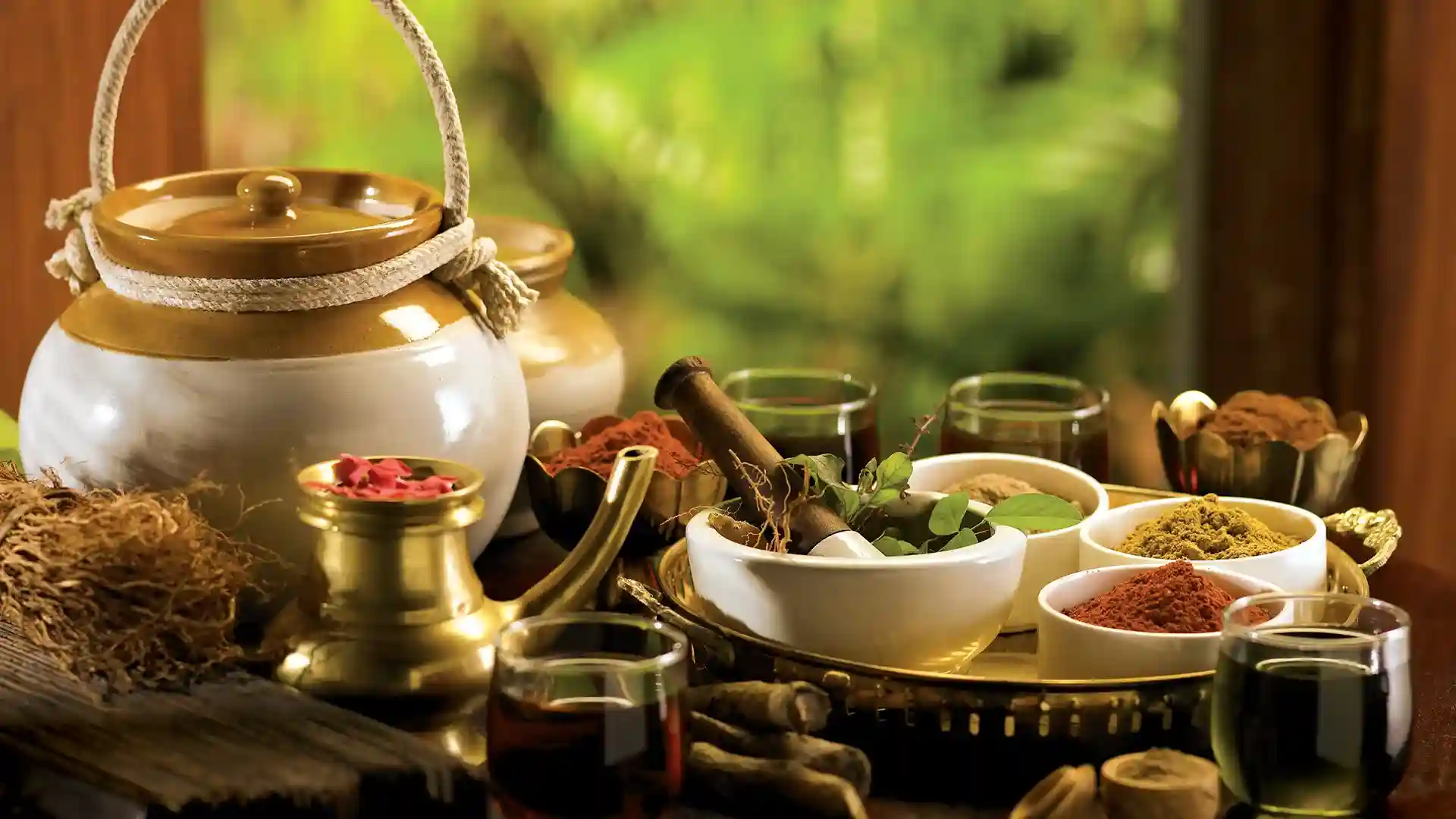
 Ayurveda, bodywork, and wellness services in Gokulam
Almost every yoga student who spends time in Gokulam ends up exploring Ayurveda or some form of bodywork. The practice demands it. When you are doing a physically intense Ashtanga sequence six mornings a week, things come up — stiffness, old injuries reasserting themselves, digestion changes, sleep disruptions, a knee that was fine at home but is suddenly vocal about your lotus posture. Gokulam, having catered to this population for decades, has developed a dense network of practitioners who work with these exact issues.
But navigating that network is not straightforward, especially if you are new to Ayurveda. Here is what you should actually know.
What Is Ayurveda, and What Is It Not?
Ayurveda is a complete medical system that originated in India thousands of years ago. It is not spa treatment, though it can look like spa treatment if you encounter it in a resort setting. It is not a collection of massages and herbal products, though those are components. And it is not a single thing — Ayurveda encompasses diagnosis, diet, herbal medicine, lifestyle prescription, and physical treatments, all organised around a constitutional framework that categorises individuals by their dominant dosha (Vata, Pitta, or Kapha).
In Gokulam, Ayurveda exists on a spectrum. At one end, there are qualified Ayurvedic doctors (BAMS degree holders) who provide full consultations, diagnose imbalances, prescribe herbal formulations, and design treatment plans. At the other end, there are massage therapists who offer Ayurvedic-style oil treatments without the diagnostic or medical framework. Both have their place. The important thing is knowing which you are getting and what you actually need.
If you are dealing with a specific health concern — a persistent injury, chronic digestive issues, significant sleep disruption, or anything that feels medical rather than just tight muscles — start with a proper consultation from a qualified Ayurvedic doctor. If you want a weekly oil massage to support your practice and help your body recover, a skilled bodyworker may be exactly right. The mistake is treating them as interchangeable.
What Types of Ayurvedic Treatments Are Available in Gokulam?
Gokulam offers a wide range of Ayurvedic treatments, from single sessions to multi-week therapeutic programs. Here are the most common ones you will encounter and what they actually involve.
What Is Abhyanga and Why Do So Many Yoga Students Get It?
Abhyanga is a full-body warm oil massage and the most commonly sought Ayurvedic treatment among yoga students in Gokulam. It involves a trained therapist applying medicated oil (the specific oil chosen based on your constitution or current imbalance) in long, rhythmic strokes that follow the direction of circulatory flow. Sessions typically last sixty to ninety minutes. The oil is generous — you leave drenched in it, and the tradition is to let it soak into the skin for some time before bathing.
For Ashtanga practitioners, Abhyanga serves a practical purpose beyond relaxation. The warm oil penetrates muscles and joints that are being worked intensively every morning. It supports recovery, reduces stiffness, and helps the body manage the cumulative stress of daily practice. Many students schedule Abhyanga once or twice a week as a regular part of their Gokulam routine. It is not luxury. It is maintenance.
What Is Shirodhara?
Shirodhara is the treatment where warm oil is poured in a continuous, thin stream across the forehead. It looks dramatic and slightly strange if you have not seen it before. The experience is deeply calming — most people enter a state somewhere between waking and sleeping. Sessions typically last thirty to forty-five minutes, often combined with a shorter massage beforehand.
Shirodhara is traditionally used for conditions related to the nervous system — anxiety, insomnia, mental agitation, headaches, and the kind of persistent mental restlessness that some practitioners experience when intensive daily practice stirs up more than the body can easily process. If you are three weeks into your Gokulam stay and your mind is louder than ever despite daily practice, Shirodhara is worth trying.
What Is Nasya?
Nasya involves the administration of medicated oil or herbal preparations through the nasal passages. It sounds unpleasant. It is mildly uncomfortable for a moment and then remarkably clearing. Nasya is traditionally indicated for conditions above the shoulders — sinus congestion, headaches, neck stiffness, certain types of facial pain, and general heaviness in the head.
For yoga students, Nasya is particularly relevant because the nasal passages are the primary breathing channel for Ashtanga practice. If you have chronic sinus congestion that is interfering with your ujjayi breath, or if the dust and pollution of Indian streets is affecting your respiratory comfort, Nasya can make a meaningful difference. It is typically administered as part of a broader treatment plan rather than as a standalone.
What About Panchakarma?
Panchakarma is Ayurveda's intensive detoxification and rejuvenation protocol. It is not a single treatment but a structured multi-day (sometimes multi-week) process that includes preparatory treatments, the main detox procedures, and a recovery period with specific dietary and lifestyle guidelines.
Gokulam has several clinics and practitioners who offer Panchakarma, but this is not something to do casually during a yoga trip. A proper Panchakarma requires you to significantly modify or pause your asana practice during the treatment period. The detox procedures are physically demanding in their own way, and combining them with a full morning practice is counterproductive and potentially harmful. If Panchakarma interests you, plan a dedicated period for it — ideally at least two weeks, with reduced or no asana practice, and under the guidance of a qualified Ayurvedic doctor.
When Should a Yoga Student Seek Ayurvedic Treatment?
Not everything requires treatment. Some discomfort is a normal part of adapting to daily intensive practice in a new climate. The body adjusts, and what feels alarming in week one often resolves by week three with nothing more than rest, hydration, and patience.
What Symptoms Suggest You Should See an Ayurvedic Doctor?
Certain patterns are worth professional attention. Persistent digestive issues — ongoing loose stools, constipation, bloating, or loss of appetite that does not resolve after the first week of dietary adjustment — often respond well to Ayurvedic treatment. Sleep disturbances that worsen rather than improve over time are another signal. Joint pain or inflammation that is getting worse rather than better with continued practice needs attention before it becomes a real injury. Skin issues, respiratory problems, and persistent fatigue beyond the normal adjustment period are all reasons to consult someone qualified.
The key word is "persistent." Gokulam's climate, food, and water are different from what your body is used to. Some digestive adjustment is normal. Some fatigue in the first two weeks is normal. Some muscle soreness is normal. What is not normal is things getting worse rather than better as the weeks pass.
How Do I Find a Good Ayurvedic Practitioner in Gokulam?
Word of mouth within the yoga community is the primary referral mechanism, and it is surprisingly reliable. Ask fellow students at your shala, ask your teacher (many have established relationships with specific practitioners), and ask at the cafes where experienced students congregate. The names that keep coming up across different conversations tend to be the trustworthy ones.
Look for practitioners with formal qualifications — a BAMS (Bachelor of Ayurvedic Medicine and Surgery) is the standard medical degree. Experience working specifically with yoga practitioners is a bonus, because the intersection of intensive asana practice and Ayurvedic treatment has specific considerations that a general Ayurvedic doctor may not be attuned to.
Browse Ayurveda and wellness services on Sutraha to see practitioners in the Gokulam area, read their backgrounds, and check availability.
What About Non-Ayurvedic Bodywork?
Ayurveda is not the only bodywork available in Gokulam. The neighbourhood's international yoga community has attracted practitioners from various modalities, and the range of options is broader than you might expect.
What Other Types of Bodywork Do Students Use?
Deep tissue and sports massage. Several therapists in Gokulam specialise in deep tissue work aimed at athletic recovery. This is distinct from Ayurvedic Abhyanga — the intention is targeted muscular release rather than constitutional balancing. For specific tension patterns or stubborn tightness from practice, this can be more directly effective than a general oil massage.
Thai massage. Thai massage's combination of passive stretching and compression work complements Ashtanga practice well. Several practitioners in Gokulam offer it. It is particularly useful for practitioners who struggle with hip opening or spinal mobility — the assisted stretching can access ranges that are difficult to reach on your own.
Craniosacral therapy. Available from a few practitioners, craniosacral work is subtle and works with the body's rhythmic motions in a way that can be deeply settling for a nervous system under the stress of daily intensive practice. It is worth trying if you feel physically recovered but emotionally or energetically unsettled.
Physiotherapy. For actual injuries rather than general maintenance, some practitioners in Gokulam offer physiotherapy or sports rehabilitation. If something is genuinely injured — not just sore, but structurally compromised — this may be more appropriate than any form of massage or Ayurvedic treatment.
How Does Ayurveda Relate to Ashtanga Practice?
The relationship between Ayurveda and yoga is old and deeply intertwined. In the traditional Indian framework, they are sister sciences — yoga addresses the mind and spirit through practice, while Ayurveda addresses the body and its systems through diet, lifestyle, and medicine. Practiced together, they are meant to be complementary.
How Do the Doshas Affect Your Practice?
Understanding your Ayurvedic constitution (Prakriti) can illuminate patterns in your practice that are otherwise puzzling. Vata-dominant practitioners tend toward flexibility but struggle with stability and consistency — they may have spectacular backbends but find it difficult to maintain a steady daily routine. Pitta-dominant types bring intensity and discipline but can push too hard and overheat, both literally and figuratively. Kapha-dominant practitioners have endurance and steadiness but may struggle with lethargy and the motivation to start.
These are generalisations, and real humans are mixtures rather than single types. But even a basic awareness of your constitutional tendencies can help you understand why certain aspects of the practice come easily and others feel like perpetual struggles. An Ayurvedic consultation early in your Gokulam stay can provide this framework.
Should I Adjust My Diet Based on Ayurvedic Advice?
Dietary recommendations from an Ayurvedic practitioner can be genuinely useful, particularly if you are experiencing digestive issues or energy fluctuations. The Ayurvedic approach to food is highly individualised — what is balancing for one constitution may be aggravating for another — and this specificity is its strength.
That said, exercise common sense. If an Ayurvedic recommendation conflicts with your direct experience of what makes you feel well and practice well, pay attention to your own body. The best Ayurvedic practitioners will tell you the same thing: their recommendations are a starting framework, not a rigid prescription. Adjust based on how you actually feel.
What About Other Wellness Services in Gokulam?
Beyond Ayurveda and bodywork, Gokulam offers a range of wellness-adjacent services that many students incorporate into their stay.
What Else Is Available?
Yoga therapy and private sessions. Some teachers offer private sessions focused on specific issues — injuries, chronic conditions, or aspects of the practice you want individual attention on. These are distinct from regular Mysore-style classes and can be valuable for working through particular challenges.
Nutrition and dietary counselling. A few practitioners in Gokulam offer nutritional guidance specific to yoga practitioners — addressing questions about protein intake, fasting protocols, digestive optimization, and how to eat in a way that supports intensive daily practice.
Meditation instruction. While Ashtanga yoga contains meditative elements inherently, some students seek dedicated meditation instruction. Several teachers in Gokulam offer classes in various traditions — Vipassana-influenced sitting practice, mantra meditation, yoga nidra, and other approaches.
Acupuncture and traditional Chinese medicine. Available from a small number of practitioners, and sought out by students dealing with specific pain patterns or chronic conditions that respond well to acupuncture.
All of these services can be browsed on Sutraha's services page, where practitioners list their offerings, qualifications, and availability.
How Much Should I Expect to Spend on Wellness?
This varies enormously based on what you pursue and how frequently. A single weekly Abhyanga massage is a modest recurring expense. A daily treatment schedule combined with herbal medicines and a Panchakarma program is a significant investment. Most students fall somewhere in between — a massage or two per week, perhaps an Ayurvedic consultation with follow-up herbs, and the occasional specialist treatment.
The key advice is to start conservatively. Do not book a month of daily treatments in your first week. Let the practice settle, see what your body is actually asking for, and then respond. The practitioners in Gokulam are not going anywhere. You can add treatments as needed rather than committing to everything upfront.
For current practitioner listings, qualifications, and availability, browse wellness services on Sutraha. For broader planning guidance, see our cost of living guide and our FAQ page.