

Most articles about "doing yoga in Mysore" describe the city broadly and miss the point entirely. The yoga world of Mysore is not spread across the city. It is concentrated in one quiet residential neighbourhood called Gokulam — and once you understand this, everything else becomes easier to plan.
This guide is for practitioners making their first trip. Not a highlight reel — just what you should actually know.
This Is Gokulam, Not Mysore
Gokulam is a residential layout about three kilometres from central Mysore city. It is not a tourist area. There is no nightlife, minimal traffic noise by 9pm, and no particular reason to be here unless you are practicing yoga or supporting someone who is.
The neighbourhood built itself around the practice over decades. The late Sri K. Pattabhi Jois taught Ashtanga yoga from his home here, and students arrived from across the world — first in small numbers, then in a steadier flow that has not stopped. Guesthouses, small cafes, health food shops, coconut stalls: Gokulam is what a yoga town looks like when it grows organically around a practice rather than around marketing.
If you are booking flights and accommodation for your first trip, aim for Gokulam specifically. Being walkable distance from your shala is not a convenience — it is part of the practice. You will be waking early and arriving half-asleep. You do not want to be solving a 20-minute commute at 5am.
The Morning Rhythm
Nothing quite prepares you for Gokulam at 5am.
The neighbourhood wakes in stages. Auto-rickshaws start early. Then gates opening, mats under arms, the street dogs shifting position. Shalas are lit from inside — windows bright against the dark sky, the sound of steady breathing audible if you pass close enough. Students walk without much conversation. By 8 or 9am, practice is finished, hunger arrives sharply, and the social life of the neighbourhood begins.
Hemant's coconut stall and Ramesh's nearby are where you will find half your shala after morning practice — standing in the road with a fresh coconut, not saying much at first, then gradually talking. Amrut tea, a quiet spot on the route between several shalas, fills up steadily with post-practice students who are not yet ready to go home. Anokhi Cafe and Nature's Blessing are where the longer conversations happen — plans, adjustments, advice exchanged between students who have been in Gokulam longer than you.
This daily rhythm is not incidental to the practice. It is part of it. The rest, the food, the conversation, the early sleep — all of it supports what happens on the mat.
What to Expect from the Practice
Ashtanga yoga in the Mysore style is a morning practice. Each student moves at their own pace through a memorised sequence while the teacher moves around the room giving individual instruction and hands-on adjustments. There is no music, no class structure to follow, no one else's pace to keep up with. You arrive, you begin where you left off yesterday, you finish when you finish.
For practitioners used to led group classes, the first few sessions feel exposed. There is nowhere to hide — no one in front of you to copy, no instructor calling out what comes next. You are responsible for knowing your sequence. The practice becomes yours very quickly, and that is precisely the point.
Expect to spend most of your time on Primary Series regardless of what you practice at home. Teachers in Gokulam tend to bring students back to fundamentals. This is not a judgment on your level. It is the system working as intended — the primary series is deeper than it looks, and most practitioners discover material in it they had been moving past too quickly.
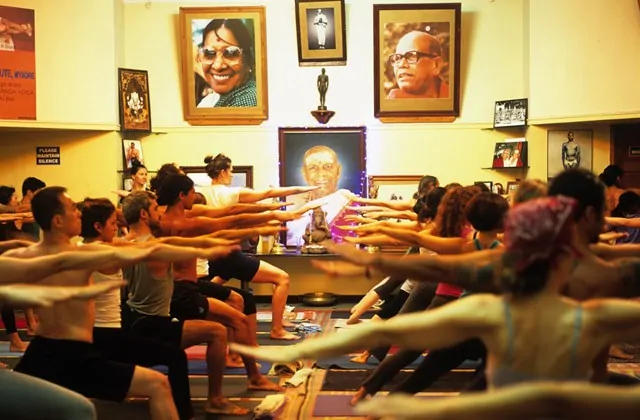 Practice and all is coming
Practical Things to Know
How long to come for: A minimum of one month is the standard advice for a meaningful stay. Six weeks or two months is better. The first two weeks are acclimatisation — to the heat, the food, the early mornings, the unfamiliar pace. If you leave at three weeks, you leave at the awkward point before things settle. Give yourself enough time for the practice to actually shift.
When to come: November through February is the most comfortable — cool, dry, lower humidity. The practice is still challenging but the climate is manageable. March through May becomes significantly hotter. June through September is monsoon, which some practitioners love and others find genuinely difficult. Either way, the shala culture continues through all of it.
Cost: Gokulam is affordable by most international standards. Monthly shala fees, a rented room or guesthouse, and daily food can be managed on a modest budget. Exact figures shift; check directly with shalas and accommodation listed on Sūtraha for current rates rather than relying on information that may be several years old.
Visa: Most international visitors enter India on a tourist e-Visa, available online before travel. For longer stays across two to three months, plan your entry timing carefully and research the latest requirements for your nationality.
Language: English is widely spoken in Gokulam's yoga community. Kannada is the local language — a few words (hello, thank you, numbers for bargaining) are appreciated and go further than you might expect.
The Community You Will Find
The international Ashtanga community in Gokulam is, in general, a serious one. People have rearranged jobs, relationships, and finances to be here. The conversations, when they happen, tend to be substantive — about practice, about what changes over time, about injuries and patience and the long arc of learning something difficult.
There is also a genuine warmth to the community that first-time visitors sometimes do not anticipate. Most experienced students here remember their own first weeks — the disorientation, the adjustment, the small embarrassments of not knowing the local rhythm yet. People are usually willing to help if you ask directly.
You will also find, quickly, that the practice itself creates community in ways that are hard to explain from the outside. Sharing a Mysore room with thirty other practitioners every morning — without speaking, side by side in the same work — is its own kind of connection.
Before You Arrive
Research before you land will save you real time and stress on the ground. Browse yoga shalas, accommodation, and wellness services on Sutraha to get a sense of different teachers, living arrangements, and what is available across Gokulam before your flight.
Arrive with some openness to being surprised. Gokulam has a habit of rearranging what practitioners thought they came for — and giving them something they did not know they needed.