

 Practice and all is coming
The Ashtanga yoga lineage in Mysore traces back to Sri K. Pattabhi Jois, who founded the Ashtanga Yoga Research Institute and spent over six decades refining a teaching method rooted in daily practice and direct transmission. Today, his grandson R. Sharath Jois continues this tradition at the Sharath Yoga Centre in Gokulam. For serious practitioners, understanding this lineage is not academic — it shapes how you choose where and with whom to study.
The Heart of Ashtanga Yoga in Mysore
Gokulam, a quiet residential neighbourhood in Mysore, Karnataka, draws thousands of international yoga students every year. They come for one reason: to practice Ashtanga yoga at its source, under teachers who carry direct lineage connections to the method's founders.
The word parampara — the unbroken chain of knowledge passed from teacher to student — defines how Ashtanga yoga has been transmitted for generations. Unlike certification programmes where a curriculum is standardised and distributed, parampara requires years of daily practice under a teacher's direct observation before that teacher endorses you to teach others. This system is why Mysore matters. The depth of instruction available here cannot be replicated through weekend workshops or online courses.
What makes Gokulam exceptional is not just any single shala, but the entire ecosystem — experienced teachers with decades of practice, a community of fellow students from every continent, and a daily rhythm built entirely around the practice. You wake before dawn, walk to your shala in the dark, practice for ninety minutes to two hours, and then step into a neighbourhood that exists to support exactly this routine. Cafes open at 7am for post-practice breakfast. Ayurvedic clinics schedule treatments around the morning shala timetable. Even the guesthouses set their hot water schedules for 4am.
Sri K. Pattabhi Jois: The Foundation
Sri Krishna Pattabhi Jois (1915–2009), known to students as Guruji, began studying yoga as a teenager under the legendary T. Krishnamacharya in the 1930s. Krishnamacharya, often called the father of modern yoga, taught at the Mysore Palace and developed the vinyasa system — linking breath to movement in a precise sequence of postures.
Pattabhi Jois took this teaching and devoted his life to one method: the Ashtanga Vinyasa system. In 1948 he established the Ashtanga Yoga Research Institute (AYRI, later renamed KPJAYI) in Mysore. For decades he taught from a small room in his home, accepting a handful of students at a time. Each student received individual attention within a group setting — the format now known worldwide as "Mysore style."
The method is built on the Tristhana principle: breath (ujjayi pranayama), posture (asana), and gaze point (drishti). Students learn a fixed sequence of postures — the Primary Series (Yoga Chikitsa), then the Intermediate Series (Nadi Shodhana), and eventually the Advanced Series. New postures are given one at a time, only when the teacher determines the student is ready. This patient, progressive approach means no two students in the room are doing the same thing at the same time.
Western students began arriving in Mysore in significant numbers from the 1970s onward, drawn by early practitioners who had studied with Guruji and returned home to teach. By the 1990s, Gokulam had become a global pilgrimage site for Ashtanga practitioners. Guruji continued teaching daily until shortly before his passing in May 2009, by which point he had directly taught tens of thousands of students from every continent.
R. Sharath Jois: Continuing the Lineage
Ramesh Sharath Jois, Pattabhi Jois's grandson, grew up practicing alongside his grandfather from childhood. He began assisting in the shala as a teenager and took on increasing teaching responsibilities through the 2000s. When Guruji passed, Sharath assumed leadership of the KPJAYI and became the primary lineage holder of the Ashtanga method.
In recent years, Sharath established the Sharath Yoga Centre (SYC) in Gokulam as a dedicated teaching space. The centre attracts hundreds of students during peak season, with practitioners registering months in advance for the opportunity to study under his direct instruction.
Sharath's teaching emphasises strict adherence to the traditional sequence and the importance of long-term, sustained daily practice. His conferences — informal talks held after Saturday led classes — cover yoga philosophy, practice advice, and the deeper purpose of the Ashtanga method beyond physical postures. He maintains the Authorization and Certification system established by Guruji, formally recognising teachers who have demonstrated sufficient depth of practice and understanding to teach the method to others.
The concept of parampara is central to Sharath's teaching. He speaks frequently about the difference between learning yoga as a subject and receiving yoga as a transmission — the latter requiring the physical presence of a teacher who can see, correct, and guide the student over an extended period. This is why, for many practitioners, studying in Mysore at some point in their practice journey is considered not optional but essential.
Choosing Where to Practice in Gokulam
Gokulam today has a rich ecosystem of yoga shalas in Mysore beyond the Sharath Yoga Centre. Many experienced teachers — some with Authorization from KPJAYI, others with decades of independent practice — have opened their own shalas in the neighbourhood. Each has a distinct teaching style, class size, and atmosphere.
When choosing a shala, the most important factors are not credentials alone but practical considerations that affect your daily experience:
-
Class size and individual attention. Some shalas maintain groups of ten to fifteen students, allowing for extensive one-on-one time. Others accommodate thirty or more. Neither is inherently better — some students thrive in the energy of a larger room, while others need the quiet focus of a smaller group.
-
Teaching approach. Traditional Ashtanga follows a strict progression through the series, with new postures given only when the teacher is satisfied with the student's current practice. Some teachers are more conservative in progression, others more flexible. Know your own needs and ask before committing.
-
Schedule and availability. Most shalas offer morning Mysore-style practice starting between 4:30am and 6:30am, six days per week (rest on Saturdays and moon days). Some also offer afternoon led classes or workshops. Peak season from November through February fills up quickly — contact shalas well in advance.
-
Monthly fees. Shala fees in Gokulam vary depending on the teacher's reputation and the facilities offered. Most charge monthly tuition that covers daily morning practice. Contact shalas directly through their listings for current pricing — rates change from year to year.
Browse verified yoga shalas in Mysore on Sutraha to compare locations, teaching styles, and contact details before you arrive.
Daily Life as an Ashtanga Student in Mysore
Practicing in Gokulam means organising your entire day around the morning practice. A typical day looks something like this:
4:00–4:30am — Wake up. Most students eat nothing before practice, or at most drink water or a small amount of coffee.
4:45–5:00am — Walk to the shala. Gokulam is compact — most guesthouses are within five to ten minutes on foot from the major shalas.
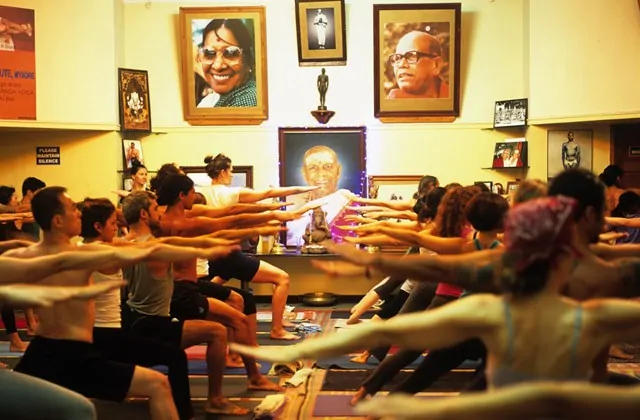
5:00–7:00am — Practice. Mysore-style practice takes ninety minutes to two hours depending on where you are in the series. The room is warm, the pace is your own, and the teacher circulates giving adjustments.
7:00–8:30am — Breakfast. Post-practice breakfast is a ritual in Gokulam. Cafes serve South Indian filter coffee, idli, dosa, and fresh juices alongside Western options like porridge, smoothie bowls, and toast.
8:30am–12:00pm — Rest, study, or work. Many students return to their rooms to rest, particularly in the first weeks when the body is adjusting to six-day-per-week practice. Others use this time for Sanskrit study, yoga philosophy reading, or remote work at one of Gokulam's co-working spaces.
12:00–6:00pm — Afternoon activities. Some shalas offer afternoon workshops or led classes. Others use this time for Ayurvedic treatments, exploring Mysore's markets and temples, or simply resting.
8:00–9:00pm — Sleep. Early bedtimes are not a choice but a necessity when your alarm goes off before 5am six days a week.
Finding accommodation close to your shala makes a significant difference to the sustainability of this routine. Even a short auto-rickshaw ride at 4:45am adds friction that compounds over weeks.
Beyond Asana: Deepening Your Practice in Mysore
Gokulam offers far more than morning shala practice. The broader yoga tradition includes pranayama (breathwork), Vedic chanting, yoga philosophy, and meditation — all of which are taught by experienced practitioners in the neighbourhood.
Pranayama and chanting. Several teachers in Gokulam offer pranayama instruction, typically in the late morning after the main practice. Vedic chanting classes teach the traditional Sanskrit invocations used to open and close Ashtanga practice, and sometimes extend into deeper study of the Yoga Sutras of Patanjali.
Ayurveda and bodywork. Daily intensive practice creates physical demands that Ayurvedic medicine is specifically designed to support. Gokulam has experienced Ayurvedic doctors and bodyworkers offering consultations, oil treatments, and therapeutic massage tailored to the needs of yoga practitioners. Many students schedule regular treatments as part of their weekly routine.
Philosophy and self-study. Living in Gokulam for a month or more creates space for the kind of sustained reflection that a weekly yoga class cannot provide. Several teachers offer small-group philosophy discussions, and bookshops in Mysore stock texts on yoga philosophy, Advaita Vedanta, and related subjects that deepen the intellectual context of the physical practice.
Browse wellness services and practitioners on Sutraha to find Ayurvedic treatments, chanting classes, and philosophy sessions during your stay.
Planning Your Trip to Mysore
If you are considering studying Ashtanga yoga in Mysore, practical preparation makes the difference between a smooth experience and a stressful one.
Visa. Most international visitors enter India on a tourist e-Visa, which can be applied for online. A standard tourist visa covers study at a yoga shala. See our visa guide for yoga students for current requirements by nationality.
Timing. The peak season runs from November through February — the most comfortable weather, the largest community, and the busiest shala schedules. March through May is significantly hotter. June through September is monsoon season with fewer students and more availability. See the best time to visit Gokulam for yoga for a month-by-month breakdown.
Accommodation. Book in advance for peak season. Stay within walking distance of your chosen shala — browse places to stay in Mysore on Sutraha.
Budget. Gokulam is affordable by international standards. Monthly shala fees, accommodation, food, and incidental costs are all manageable for most international students. See our cost of living guide for current estimates.
Local businesses. Gokulam has everything you need — cafes, health food shops, laundry, SIM cards, scooter rentals. Browse local businesses on Sutraha.
Frequently Asked Questions
What is the significance of Mysore in Ashtanga yoga?
Mysore is the birthplace of the Ashtanga Vinyasa method as taught by Sri K. Pattabhi Jois. It is considered the primary destination for dedicated practitioners because it offers the rare opportunity to learn directly from the source of the lineage and immerse fully in the traditional daily practice.
Can beginners practice Ashtanga yoga in Mysore?
Yes, beginners are welcome in Mysore. Many local shalas offer dedicated introductory instruction. The traditional Mysore style is actually ideal for beginners because the teacher provides one-on-one instruction within a group setting, allowing the practice to be tailored entirely to the individual's ability and pace.
What are typical yoga shala fees in Gokulam?
Fees for studying at shalas in Gokulam are generally charged monthly and cover daily morning Mysore-style classes five to six days a week, plus a weekly led class. Exact prices vary by shala and should be confirmed directly — browse current listings on Sutraha's shala directory.
Do I need to register in advance?
Registration in advance is highly recommended, especially during peak season from November through March, when the most sought-after shalas fill their slots weeks or months ahead. For smaller, independent shalas, advance booking ensures you secure a spot with your preferred teacher.
What does Mysore style practice mean?
Mysore style refers to the traditional method of teaching Ashtanga yoga developed in Mysore. Unlike led classes where everyone moves together, Mysore style is a supervised self-practice. Students memorise the sequence and move at their own breath pace, while the teacher gives individual hands-on adjustments and verbal cues.
How do I find an authorised Ashtanga teacher in Mysore?
Browse the Sutraha shala directory to find verified yoga shalas in Mysore, read about teachers' backgrounds and approach, and contact them directly to ask about fees, schedules, and suitability for your level of practice.